5 ways to treat sleep problems as you Age
Aging can bring many positive changes, but getting a good night’s sleep does not always become easier with age. Many older adults find that they take longer to fall asleep, wake more frequently during the night, or wake earlier than they would like.
Changes in the body’s natural sleep-wake rhythm, medications, lifestyle habits, stress, and certain health conditions can all contribute to sleep problems.
The good news is that sleep difficulties are not simply something you have to accept as an unavoidable part of aging. Identifying the underlying cause and adopting evidence-based sleep habits can often help improve sleep quality.
In this guide, we explore five practical ways to improve sleep as you age, as well as important information about Buy Zopiclone UK , a prescription sleeping medicine that may be used for the short-term treatment of insomnia in certain adults.
Why Do Sleep Problems Become More Common With Age?
Sleep patterns naturally change throughout life. As people get older, they may experience lighter sleep, wake more easily during the night, or notice that they become sleepy earlier in the evening and wake earlier in the morning.
Lifestyle changes, medications, physical health conditions, stress and changes in daily routines can also affect sleep.
However, regularly experiencing poor sleep, excessive daytime tiredness or difficulty functioning during the day should not simply be attributed to getting older. Persistent symptoms may require assessment by a healthcare professional.
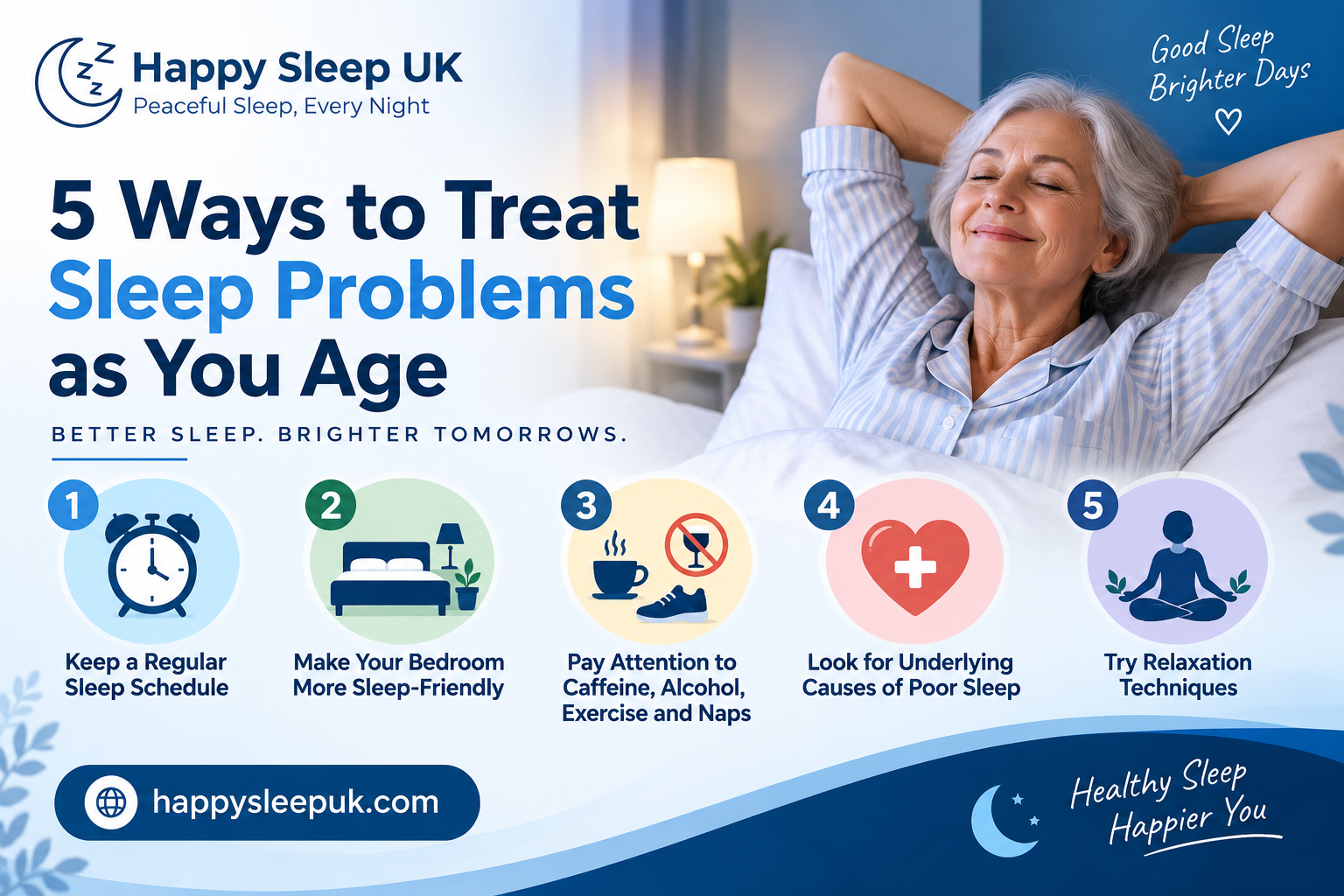
1. Keep a Regular Sleep Schedule
One of the simplest ways to support better sleep is to maintain consistent sleeping and waking times.
Try to:
- Go to bed and wake up at approximately the same time every day.
- Avoid significantly changing your sleep schedule on weekends.
- Develop a relaxing bedtime routine.
- Give yourself enough opportunity to sleep.
- Avoid spending excessive amounts of time awake in bed.
A consistent schedule can help reinforce your body’s natural sleep-wake rhythm.
Keep a Sleep Diary
If you regularly struggle with sleep, keeping a sleep diary can be useful.
Record information such as:
- Your bedtime
- The time you wake up
- How often you wake during the night
- Daytime naps
- Caffeine and alcohol consumption
- Exercise
- How rested you feel in the morning
This information can help you identify patterns and can also give your doctor or other healthcare professional useful information when assessing your sleep.
2. Make Your Bedroom More Sleep-Friendly
Your sleeping environment can have a significant effect on how easily you fall asleep and stay asleep.
Consider making your bedroom:
- Cool and comfortable
- Dark, using curtains or an eye mask if needed
- Quiet, particularly if you are sensitive to noise
- Free from unnecessary distractions
- Comfortable with a suitable mattress and pillows
Reduce Stimulation Before Bed
Try to create a relaxing period before bedtime rather than going directly from stimulating activities to sleep.
Reading, listening to quiet music or following another relaxing routine may help you wind down.
Electronic screens can also be stimulating for some people, so consider reducing screen use close to bedtime if you notice that it interferes with your ability to fall asleep.
If you lie awake for a prolonged period, getting out of bed and doing something quiet in dim lighting before returning to bed may be more helpful than repeatedly checking the clock.
3. Pay Attention to Caffeine, Alcohol, Exercise and Naps
Your daytime habits can have a major influence on nighttime sleep.
Caffeine and Sleep
Coffee, tea, energy drinks, cola and some medicines contain caffeine.
Caffeine can remain in the body for several hours and may interfere with sleep in sensitive individuals. If you notice that caffeine affects your sleep, consider reducing your intake or avoiding caffeinated drinks later in the day.
Alcohol and Sleep Quality
Alcohol may make you feel sleepy initially, but it can interfere with normal sleep and contribute to waking during the night.
If you regularly experience disrupted sleep, consider whether alcohol consumption could be contributing to the problem.
Exercise and Improve Sleep
Regular physical activity can support healthy sleep and overall wellbeing.
Walking, swimming, cycling and other suitable forms of exercise can be beneficial. Choose activities that are appropriate for your age, health and fitness level.
If vigorous exercise close to bedtime makes it harder for you to sleep, consider exercising earlier in the day.
Managing Daytime Naps
Napping can sometimes be useful, particularly if you are tired during the day. However, long or late-afternoon naps may reduce your natural sleepiness at bedtime.
If you need to nap, consider keeping the nap relatively short and earlier in the day.
4. Look for Underlying Causes of Poor Sleep
Persistent sleep problems can sometimes be a symptom of another health or lifestyle issue rather than a sleep problem by itself.
Factors that may interfere with sleep include:
- Chronic pain
- Stress or anxiety
- Depression
- Frequent nighttime urination
- Acid reflux
- Breathing problems during sleep
- Restless legs symptoms
- Menopause-related symptoms
- Certain prescription or over-the-counter medicines
- An irregular sleep schedule
Recognising Signs of Sleep Apnoea
Sleep apnoea deserves particular attention because it can interfere significantly with sleep quality.
Possible warning signs include:
- Loud or persistent snoring
- Pauses in breathing during sleep
- Gasping or choking during the night
- Excessive daytime sleepiness
- Waking with a dry mouth or headache
If you or someone who sleeps near you notices these symptoms, speak with a healthcare professional. Sleep apnoea can require specific assessment and treatment.
Treating the Underlying Problem
If pain, medication, anxiety, breathing difficulties or another health condition is interfering with your sleep, treating the underlying problem may improve your sleep without relying on sleeping medication.
If your sleep problems are persistent, worsening or affecting your daytime activities, arrange an appointment with a GP or another qualified healthcare professional.
5. Consider Professional Treatment for Persistent Insomnia
When sleep problems continue for weeks or months, changing your bedtime routine alone may not be enough.
Cognitive Behavioural Therapy for Insomnia
Cognitive Behavioural Therapy for Insomnia (CBT-I) is an established treatment for persistent insomnia.
CBT-I addresses thoughts, behaviors and sleep habits that can contribute to ongoing insomnia. It may include techniques involving sleep scheduling, stimulus control, relaxation and changing unhelpful beliefs about sleep.
For chronic insomnia, behavioural and psychological approaches are generally important long-term treatment options and may be preferred over relying on sleeping medicines.
When Professional Assessment May Be Needed
A healthcare professional can:
- Review your symptoms
- Assess your sleep pattern
- Review medicines that you take
- Look for underlying health conditions
- Consider symptoms of sleep apnoea or other sleep disorders
- Discuss appropriate treatment options
Depending on the cause and severity of your insomnia, your healthcare professional can recommend the most suitable approach.
What Is Zopiclone and How Is It Used for Improve Sleep?
Zopiclone is a prescription sleeping medicine that may be prescribed for the short-term treatment of severe insomnia in certain adults.
It belongs to a group of medicines known as hypnotics. Zopiclone Dosage can help some people fall asleep more quickly and may reduce nighttime waking.
However, zopiclone is not suitable for everyone and is generally intended for short-term use. Regular or prolonged use can increase the risk of tolerance, dependence and other problems.
How Zopiclone May Help With Short-Term Insomnia
When prescribed by an appropriate healthcare professional, zopiclone may be considered when insomnia is severe and is significantly affecting a person’s wellbeing or daily functioning.
It should not be viewed as a permanent solution to chronic sleep problems. A healthcare professional should consider the underlying cause of insomnia and whether non-drug treatments may be more appropriate.
Potential Side Effects of Zopiclone
Possible side effects can include:
- Drowsiness
- Dizziness
- A bitter or metallic taste
- Reduced alertness
- Problems with coordination
- Memory problems
Not everyone experiences these effects, but they are important considerations when using prescription sleeping medicines.
Why Zopiclone Requires Extra Care in Older Adults
Older adults can be more vulnerable to the effects of sedating medicines.
Drowsiness, dizziness and impaired coordination may increase the risk of falls, confusion and accidents. For this reason, a doctor or pharmacist should consider an individual’s age, other medicines, health conditions and overall circumstances before prescribing zopiclone.
Never use someone else’s prescription sleeping medication or change the prescribed dose without medical advice.
Important Safety Considerations When Taking Zopiclone
Zopiclone should be taken only as prescribed by a healthcare professional.
It should not be combined with alcohol or other medicines that cause sedation unless a healthcare professional has specifically advised that the combination is appropriate.
Because zopiclone can cause drowsiness and reduced alertness, people should not drive, cycle or operate machinery if they are affected by these effects.
If you have been taking zopiclone regularly and want to stop, speak with your Doctors Prescribe Zopiclone for Better Sleep rather than stopping suddenly. Depending on how long and how frequently it has been used, stopping may need to be managed carefully to reduce withdrawal symptoms or rebound insomnia.
When Should You Speak to a Doctor About Sleep Problems?
Occasional poor sleep is common, but persistent insomnia deserves attention.
Consider speaking with a healthcare professional if:
- Your sleep problems continue for several weeks.
- Poor sleep is affecting your concentration, mood or daily activities.
- You regularly wake feeling unrefreshed.
- You snore loudly or experience breathing interruptions during sleep.
- You experience significant daytime sleepiness.
- You are considering taking sleeping medication.
- You regularly take sleeping medication and want to stop.
- Your sleep problems are getting worse despite lifestyle changes.
Getting professional advice can help identify whether your sleep problem is caused by insomnia itself or another underlying condition.
Can Better Sleep Habits Reduce the Need for Sleeping Medication?
For some people, improving sleep habits and treating an underlying problem can significantly improve sleep.
Maintaining a consistent sleep schedule, exercising regularly, managing caffeine and alcohol, improving the bedroom environment and addressing medical conditions can all contribute to healthier sleep.
For persistent insomnia, treatments such as CBT-I may provide a longer-term approach than relying on sleeping tablets.
Prescription medicines such as zopiclone may have a role in carefully selected cases of short-term insomnia, but they should be used under appropriate medical supervision.
The Bottom Line: Improving Sleep Problems as You Age
Sleep patterns can change as we get older, but ongoing sleep problems should not automatically be dismissed as an unavoidable part of aging.
Maintaining a regular sleep schedule, creating a comfortable sleep environment, managing caffeine and alcohol, staying physically active and identifying underlying health problems can all help support better sleep.
For persistent insomnia, CBT-I and professional assessment are important treatment options. Zopiclone may sometimes be prescribed for short-term insomnia, but it carries risks such as drowsiness, impaired coordination and dependence and is not intended to be a long-term solution.
If you are experiencing ongoing sleep difficulties, speak with a qualified healthcare professional to determine the cause and the safest treatment for your individual circumstances.
Good sleep is an important part of healthy aging—and understanding why your sleep has changed is often the best place to start.