Zopiclone is one of the most commonly prescribed short-term sleeping tablets in the UK. It is widely used to help adults fall asleep faster, reduce night-time anxiety, and improve sleep quality during periods of stress or temporary insomnia.
However, one important question is asked again and again:
“Is Zopiclone addictive?”
This UK-focused guide explains how Zopiclone works, when dependence can develop, what tolerance means, and how adults in the UK can use it safely and responsibly.
Is Zopiclone Addictive?
The short and honest answer is yes, Zopiclone can become habit-forming if used for long periods, but no, it is not considered addictive when used short-term as prescribed.
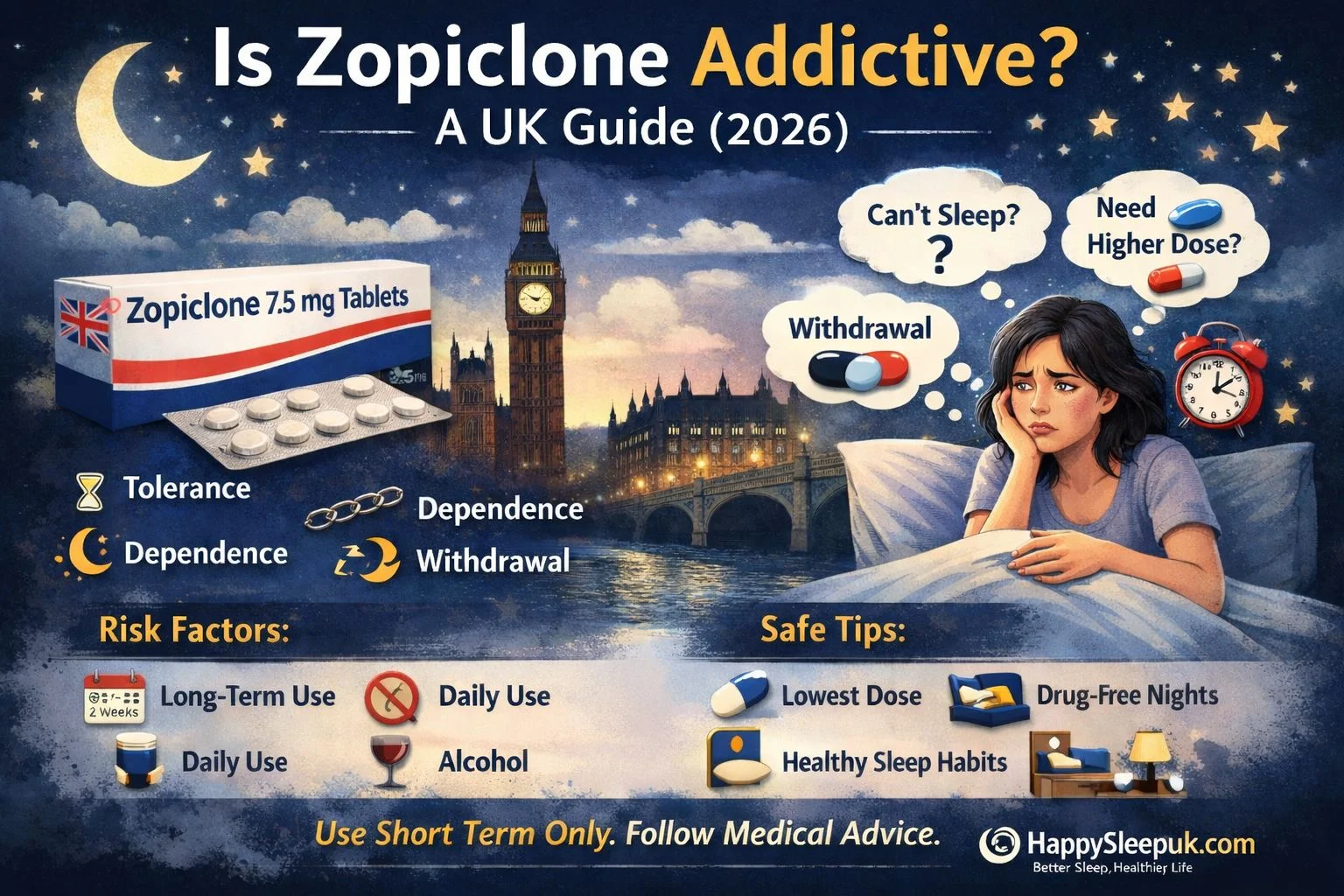
In the UK, the main concern is usually dependence rather than addiction in the traditional sense. Doctors typically observe three related issues with prolonged use: tolerance, where the body becomes used to the dose; dependence, where a person feels unable to sleep without it; and withdrawal, where sleep problems occur when the medication is stopped suddenly. These effects are unlikely with short-term use but become more common after weeks or months of nightly use.
Why Can Zopiclone Become Habit-Forming?
Zopiclone works quickly, which is why it is effective, but this rapid effect can also lead to reliance. It has a fast calming effect that quietens racing thoughts, helps users fall asleep quickly, and over time the brain may adapt to expecting sedation for sleep. This does not mean everyone becomes dependent, but the risk increases when the medication is taken for longer than recommended.
Signs of Possible Zopiclone Dependence (UK Experience)
Some people notice warning signs after extended use, such as feeling unable to sleep without the tablet, needing a higher dose for the same effect, worrying about running out, experiencing morning grogginess, or having rebound insomnia when stopping. These symptoms usually develop gradually rather than suddenly.
How Long Does It Take for Dependence to Develop?
UK prescribing guidance generally suggests that after two to four weeks of nightly use, the risk of dependence increases. Occasional or intermittent use carries a very low risk. This is why GPs typically prescribe Zopiclone for short periods only and often set a clear review or stop date.
How to Reduce the Risk of Dependence
If Zopiclone is prescribed, several steps can help reduce the risk. These include using the lowest effective dose, avoiding daily use, having drug-free nights when possible, maintaining a good sleep routine with a dark and quiet bedroom, avoiding screens before bed, avoiding alcohol completely, and never increasing the dose without medical advice.
What Happens When You Stop Taking Zopiclone?
Some people experience temporary withdrawal symptoms, particularly after long-term use. These may include difficulty Sleeping, mild anxiety, restlessness, vivid dreams, or rebound insomnia. These effects are usually short-lived, lasting around two to five days, and gradually improve. Reducing the dose slowly under medical supervision can help minimise symptoms.
Final UK Recommendation
Zopiclone can be a helpful short-term solution for insomnia when used correctly. However, daily or long-term use increases the risk of dependence. Using the medication responsibly, taking breaks between doses, and following medical advice can significantly reduce potential risks.
For more simple, UK-focused sleep guidance, visit HappySleepuk.com.